Monday, April 7, 2025

Movie Review: Shaitaan

source
A Sinister Ride Powered by Stellar Performances and a Haunting Atmosphere. If darkness had a new name, it might just be "Shaitaan". Director Vikas Bahl delivers a chilling supernatural thriller that grips you not with ghosts leaping out of shadows, but with a deeply unsettling atmosphere and unnervingly real performances that keep you on the edge of your seat.

The story begins in the comfort of Kabir’s (Ajay Devgn) seemingly perfect family — wife Jyoti (Jyotika), daughter Jahnavi (Janki Bodiwala), and son Dhruv (Anngad Raaj). Their peaceful life takes a horrifying turn when a mysterious stranger, Vanraj Kashyap (R Madhavan), enters their farmhouse and, through dark forces, gains total control over the teenage Jahnavi. As she blindly follows his increasingly dangerous commands, the family is thrown into a terrifying spiral of fear, desperation, and survival.

Source
What makes Shaitaan stand out? It’s the way it creeps under your skin without relying on flashy CGI or overused horror clichés. Instead, it builds dread through psychological manipulation, twisted games, and a slow, steady unraveling of the mystery behind Vanraj’s power.

Madhavan’s portrayal of the antagonist is nothing short of chilling. Calm, commanding, and terrifying without ever raising his voice, he gives "evil" a new face. Ajay Devgn, as the helpless yet determined father, delivers one of his most intense performances in recent years. Jyotika holds her ground with strength and emotion, while Janki Bodiwala is the true revelation — her performance as the possessed daughter is both heartbreaking and mesmerizing.

The writing by Aamir Keeyan Khan and Krishnadev Yagnik touches upon the age-old debate of supernatural forces versus scientific logic, while subtly weaving in themes of control, faith, and human frailty. Though the second half slightly loses momentum and a key twist is unfortunately revealed too soon, the film’s tight pacing and sinister undertones never let you drift too far from the tension.

Sudhakar Reddy Yakkanti’s cinematography is a visual treat for thriller fans, with shadow-heavy frames and haunting lighting that elevate the suspense. Amit Trivedi’s background score seamlessly blends into the narrative, enhancing every eerie silence and sudden movement.

Verdict:
Shaitaan may not be flawless, but it excels where it matters — atmosphere, acting, and psychological fear. It’s a gripping tale that doesn't just scare you with jump scares but haunts you with the possibility of real evil wearing a human face. If you enjoy thrillers that mess with your mind more than your heartbeat, this one's worth a watch.

 Watch it if: You're a fan of slow-burn thrillers, psychological horror, or powerhouse performances.
 Skip it if: You're expecting a traditional horror flick filled with jump scares and cheap thrills.

Rating: ★★★½☆ (3.5/5)

India Gears Up for Heatwave Days: Understanding the Rising Threat of Extreme Heat

source
With temperatures already soaring, India braces for an intense summer season. Experts point to global warming, urbanisation, and delayed rainfall as key drivers of the crisis. As summer settles in, India is once again staring down the barrel of an increasingly familiar crisis—heatwaves. According to the Indian Meteorological Department (IMD), most parts of the country are expected to experience higher-than-normal maximum temperatures from April to June 2025, except for a few areas in western and eastern India where temperatures might remain closer to average.

This worrying forecast comes after an already warmer-than-usual winter, with January, February, and March setting temperature records across the country. In a climate-first, February 2025 marked India’s first recorded winter heatwave, signaling the deepening grip of climate change.

What Is a Heatwave?

A heatwave is defined by the IMD as a period of abnormally high temperatures occurring between March and June in India. The criteria vary by region:

  • 40°C or more in plains

  • 37°C or more in coastal areas

  • 30°C or more in hilly regions

But the statistics don’t capture the lived reality: scorching streets, parched fields, and vulnerable populations exposed to brutal conditions.

Why Are Heatwaves Getting Worse?

Heatwaves are no longer just seasonal occurrences. Experts believe their intensity and frequency are the result of the interplay between global warming and local environmental degradation.

“Heatwaves are a result of the interplay of global warming and local factors,” explains M. Mohapatra, Director-General of IMD. “April to June will be hotter than usual, with more heatwaves likely in many states.”

Contributing factors include:

  • Urbanisation: Concrete jungles trap heat, creating urban heat islands.

  • Deforestation: Fewer trees mean less natural cooling.

  • High atmospheric pressure: Leads to clear skies, slow winds, and minimal rainfall.

  • Delayed western disturbances: These typically bring cooling rains to northern India; when late, they extend heatwaves.

  • Loo winds: Hot, dry gusts from the Thar Desert worsen the heat in northern regions.

source
Who Is Most at Risk?

India’s informal workforce—comprising a significant portion of the population—faces the brunt of this crisis. From street vendors and farmers to construction workers, millions must continue working outdoors in blistering heat, often without adequate protection.

Yet, despite the rising death tolls—hundreds lose their lives every year due to heat-related illnesses—heatwaves are not classified as a "notified disaster" under the Disaster Management Act, 2005. This classification is essential for mobilising national-level disaster relief and preventive infrastructure.

The Bigger Picture: Global Warming at Play

Global warming has pushed the planet into uncharted territory. Rising sea temperatures, melting glaciers, and shifting wind patterns are all part of a larger, more dangerous climate narrative. India, with its dense population and fragile infrastructure, is especially vulnerable.

Even major cities are at risk of being reshaped by climate. Bengaluru could become hotter than Delhi by 2030, while coastal states like Goa and Maharashtra are already experiencing early, intense heatwaves—a stark departure from historic patterns.

What Needs to Be Done?

Dealing with heatwaves requires a multi-layered approach:

  • Recognising heatwaves as disasters in national policies

  • Developing early warning systems and public alerts

  • Creating heat action plans for states and cities

  • Investing in urban green cover and water conservation

  • Raising awareness about heat-related illnesses and preventive care

Conclusion

As India prepares for one of its hottest summers yet, the message is clear: heatwaves are no longer just seasonal inconveniences—they are deadly, recurring disasters. Without bold steps in climate adaptation and policy reform, the country risks entering a new normal where extreme heat becomes an everyday challenge.

The heat is rising—and so must the urgency to act.


Beyond Fast Fashion: India’s Looming Textile Waste Crisis and the Road to Sustainability

source
From polluted rivers to mountains of landfill, the dark side of fast fashion threatens India’s environment. Experts say the solution lies in changing mindsets, reviving sustainable practices, and regulating overproduction.

India, one of the world’s largest textile producers, is now grappling with a growing environmental disaster—textile waste. Cities like Bengaluru are struggling to manage massive heaps of discarded clothes choking landfills, while rivers like the Noyyal in Tamil Nadu and the Bandi in Rajasthan are turning toxic due to relentless chemical waste from textile industries.

Once lifelines for nearby communities, these rivers are now unfit for consumption, showcasing the harsh reality of unchecked industrial pollution.

The Fast Fashion Fallout

The fashion industry, driven by ever-changing trends and rising consumerism, has quietly become one of the largest contributors to environmental pollution. Globally, India stands out not just for its rich textile heritage but also for the scale of its production—and now, its waste. Contributing 11% of the country’s GDP, the industry also generates a staggering 7,800 kilotonnes of textile waste annually, placing India third in global textile waste production.

“The impact of social media on the mindsets of people is huge,” says Anurag Yashvardhan, Senior Designer at Siyaram’s. “Generally, people buy more clothes out of influence rather than need.”

With platforms like Instagram and quick-turnover fashion apps driving trends, consumer behavior has shifted from necessity to impulse. The rise of fast fashion—cheap, trendy, and short-lived clothing—has accelerated overproduction, where excessive demand meets an oversupply, leading to massive textile waste.

source
Landfills Overflowing, Soil Suffering

Most unused or discarded clothes eventually end up in landfills, where they take years to decompose. During this time, chemicals from synthetic fabrics seep into the soil, pollute groundwater, and release methane, a greenhouse gas that significantly contributes to global warming

“Overproduction occurs due to high demand, excessive supply, and inaccurate estimates of fabric requirements,” explains an industry analyst. “Fast fashion’s speed-focused model has made textile waste unavoidable.”

Prime Minister Narendra Modi, speaking at Bharat Tex 2025, warned that waste from fast fashion could reach 148 million tonnes by 2030, underscoring the urgency of shifting to sustainable production and consumption.

Digital Shopping Boom & Post-COVID Trends

The post-pandemic world has only intensified the issue. With the digital boom and rise of e-commerce, shopping is now just a click away.

“Post-COVID, there was a fundamental shift in how consumers buy products,” notes Ankit Jaipuria, Co-founder of Zyod, a tech-enabled fashion platform. “People now shop every second on their mobile phones.”

This convenience-driven consumption fuels demand, and brands continue to overproduce to stay ahead of trends—only to add more to the waste cycle.

The Path Forward: Circular Fashion & Conscious Consumption

Experts suggest that India can lead the charge toward sustainable fashion by promoting:

  • Recycling and upcycling textiles

  • Enforcing stricter regulations on industrial waste

  • Supporting eco-conscious startups

  • Reviving traditional, sustainable practices like natural dyeing and handloom weaving

But the biggest shift needs to happen in mindsets. Consumers must transition from impulsive shopping to thoughtful buying, while industries must adopt sustainable production models.

Fast fashion may be trendy, but its consequences are not. As India stitches together its future, the focus must shift from style to sustainability—before the environmental cost becomes irreversible.

Inside the Newsroom: LPU BAJMC Students Visit News24 and The Times of India in Noida

Lpu
Noida | March 20-21, 2025 — A group of enthusiastic journalism students from Lovely Professional University (LPU)'s BAJMC program got a rare behind-the-scenes look at two major pillars of Indian media — News24 and The Times of India — during an educational visit to Noida on March 20 and 21.

The two-day media exposure tour was an eye-opening experience that bridged the gap between theory and practice for the students, giving them firsthand insights into the workings of top-tier media houses.

Nidhi.clicks
  A Dynamic Start at News24

 The first stop of the journey was News24, a leading Hindi news channel   known for its bold reporting and prime-time debates. The students were   welcomed warmly by the editorial and production teams, who shared   valuable insights about the daily newsroom operations, news gathering     processes, and the editorial decision-making that shapes headlines.

 They witnessed live news production and got a close look at the technical   side — from scripting and teleprompting to the role of video editors and   studio producers.

 One of the highlights was the interaction with senior journalists and     anchors, who shared their experiences, challenges, and the responsibilities   of delivering accurate, timely, and unbiased news in today’s fast-paced   media environment.


Nidhi.clicks

Exploring Print Journalism at The Times of  India

On the second day, the students visited The Times of India, India’s most-read English daily. The visit shed light on the detailed and rigorous process of newspaper production — from news selection and reporting to layout and final print.

They explored the digital wing of the TOI as well, learning how traditional print media is adapting and thriving in the digital-first era. Editors discussed how stories evolve from field reporting to final publication, and how TOI ensures journalistic ethics and integrity in every edition.

Learning Beyond the Classroom

This educational visit was more than just a field trip — it was a step into the future for aspiring journalists. “Visiting real newsrooms gave us clarity about our career paths and the importance of accuracy and responsibility in journalism,” said one of the students.

The experience not only deepened their understanding of media operations but also inspired many to pursue careers in both broadcast and print journalism.

Conclusion:
As India’s media industry continues to grow and evolve, such practical exposure is essential for budding journalists. LPU’s initiative to connect students with media professionals is a testament to its commitment to experiential learning — preparing students to become the storytellers and truth-seekers of tomorrow.

Thursday, March 27, 2025

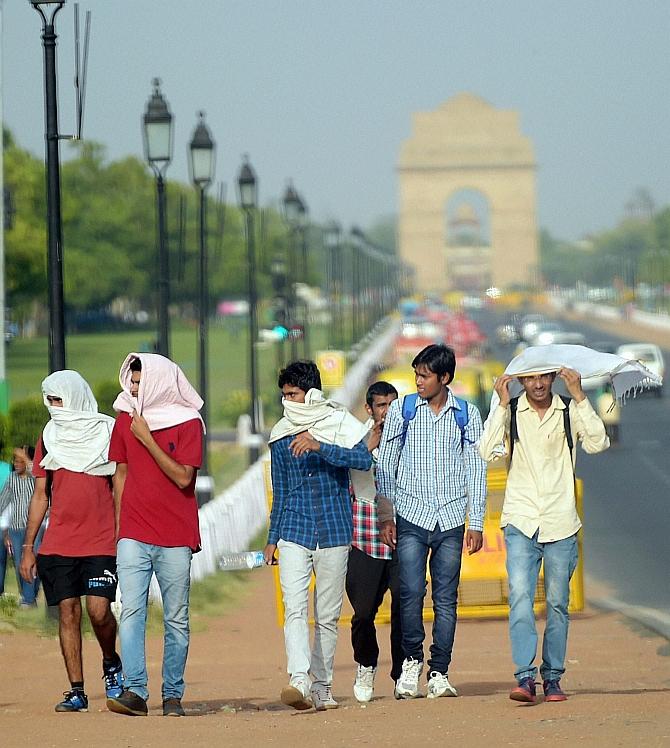
Scorching Summers: India Faces Record Heatwaves and Rising Climate Crisis in 2025

Source

The Indian subcontinent is experiencing one of its hottest summers in recent memory. With temperatures soaring across the country, concerns over climate change, water scarcity, and air quality are reaching new heights. From the northern plains to the southern coastal areas, the scorching heat is affecting millions of people, ecosystems, and the economy.

Unrelenting Heatwaves Across the Nation

Cities like Delhi, Jaipur, and Ahmedabad are already recording temperatures above 45°C (113°F), breaking historic records for the time of year. Even in cities that are usually spared from such intense heat, like Mumbai and Kolkata, residents are reporting uncomfortable highs, well above the average. The capital city of Delhi, for example, has witnessed a consistent rise in daily maximum temperatures, leading to more frequent and prolonged heatwaves.

Experts point to climate change as a significant driver of this extreme weather. With global temperatures continuing to rise, India’s summer temperatures are becoming increasingly unpredictable and more intense. Scientists warn that these heatwaves are becoming the new normal, and without immediate action, the frequency and intensity of such events will likely worsen.

source

Impacts on Agriculture and Water Resources

The relentless heat is having a profound impact on agriculture, which is already under pressure from irregular monsoons and limited rainfall. Farmers, particularly in states like Punjab, Haryana, and Uttar Pradesh, are struggling to cope with the heat, leading to reduced crop yields. Crops like wheat, rice, and pulses are particularly vulnerable to the soaring temperatures, which have caused many crops to wither or be prematurely harvested.

Water scarcity is another major issue exacerbated by this extreme summer. Reservoir levels across many parts of the country have dropped significantly, leaving millions of people without reliable access to fresh water. Cities like Chennai, Bengaluru, and even Hyderabad are facing water shortages, while rural communities are increasingly reliant on water tankers and unprotected groundwater sources. This situation calls attention to the urgent need for water conservation and better management of India’s water resources.

Air Quality Woes

The high temperatures also worsen air quality, particularly in metropolitan cities. Rising levels of particulate matter (PM2.5) and ground-level ozone contribute to severe pollution, which not only makes the air harder to breathe but also increases the risks of respiratory illnesses and heat-induced stress. People with pre-existing health conditions, the elderly, and children are especially vulnerable to the harmful effects of air pollution. Many cities are now urging residents to limit outdoor activities and wear masks to protect themselves from the toxic air.

A Wake-Up Call for Climate Action

With the effects of climate change becoming increasingly evident, there is a growing call for urgent action from both the Indian government and the global community. India, being one of the world’s largest emitters of greenhouse gases, is facing the brunt of the climate crisis, and urgent efforts to reduce emissions, promote renewable energy, and create sustainable agricultural practices are needed.

While India has taken steps to combat climate change, such as pledging to reduce its carbon emissions under the Paris Agreement and increasing investments in solar and wind energy, many believe that more immediate measures are necessary. Local and national authorities must focus on improving water management systems, investing in green infrastructure, and ensuring that climate resilience becomes a priority in urban planning.

Looking Forward

As we experience another intense summer, the message is clear – climate change is no longer a distant threat, but a present reality. The people of India are facing a challenging future if decisive action is not taken soon. Whether it's improving energy efficiency, conserving water, or rethinking agricultural practices, the time to act is now.

The coming weeks will likely see temperatures continue to rise, and without significant intervention, the impact on India’s environment, economy, and public health will be severe. As the country braces for a future that may be even hotter, the urgent need for systemic change and increased awareness about climate action has never been clearer.

Friday, February 21, 2025

LPU Hosts 15th Annual Athletics Meet: A Celebration of Sportsmanship and Excellence

The 15th Annual Athletics Meet at Lovely Professional University (LPU) was a spectacular showcase of talent, determination, and sportsmanship. Held on February 21st at the Boys Hostel 4 ground, the event brought together students from 26 LPU schools, each displaying their athletic prowess in various competitions.

A highlight of the event was the recognition of LPU’s exceptional athletes who have brought glory to the university in prestigious sports like Judo, Yoga, Taekwondo, Karate, and more. These Vertos have made their mark on global platforms such as the Olympics and AIU Games, showcasing their dedication and skill.

Adding to the grandeur of the occasion, LPU was honored to welcome its very own student and wrestler, Nisha Dahiya, as the Chief Guest. Her presence was a source of immense inspiration for aspiring athletes, motivating them to push their limits and strive for excellence in their respective sports.

The event was not just about competition but also about celebrating LPU’s significant contribution to Indian sports. From electrifying performances to heartfelt moments of recognition, the Annual Athletics Meet truly embodied the university’s commitment to nurturing sporting talent and fostering a culture of excellence.

Stay tuned for glimpses of this exciting event and join us in celebrating the spirit of sports at LPU!

Saturday, February 15, 2025

Ensemble '25: A Grand Carnival of Culture, Creativity, and Celebration at LPU

Lovely Professional University (LPU) came alive with colors, music, and excitement on the 13th and 14th of February as it hosted Ensemble '25 – A Carnival, a spectacular event that brought together students, entrepreneurs, and artists from various fields. Organized by the Division of Student Organization," Untangle " Division of Youth Affairs, the event transformed the Helipad Ground into a bustling fairground filled with stalls, performances, and engaging activities.

A Melting Pot of Creativity and Commerce

Students from BBA, MBA, B.Tech, B.Com, BA, and many other departments showcased their entrepreneurial and creative skills through diverse stalls. These stalls offered everything from handmade crafts, artistic designs, and tech innovations to unique business ideas that reflected the dynamic spirit of LPU students.

Adding to the diversity, external vendors also participated, setting up stalls that catered to a wide audience. The marketplace was brimming with an array of products, including delicious food, trendy jewelry, nail art, fresh flowers, stylish dresses, fun games, music, books, and captivating performances. Visitors had the chance to indulge in shopping, enjoy interactive experiences, and witness incredible artistic showcases.

Star Power and Enthralling Performances

One of the highlights of Ensemble '25 was the presence of Mukul Sharma, who added glamour and enthusiasm to the carnival. His interaction with the audience brought an extra dose of excitement, making the event even more memorable.

Throughout the two days, the air was filled with live music, dance shows, and cultural performances, creating a festive and electrifying atmosphere. The carnival also featured thrilling games and competitions that kept attendees engaged and entertained.

A Platform for Growth and Expression

The event served as more than just a fun-filled festival; it was a platform for students to showcase their talents, entrepreneurial skills, and creativity. The vibrant stalls and engaging activities allowed young minds to interact with a larger audience, gain real-world business exposure, and celebrate the essence of youth-driven innovation.

The Grand Success of Ensemble '25

With an overwhelming response from students, faculty, and visitors, Ensemble '25 – A Carnival proved to be a grand success. The event highlighted LPU’s commitment to fostering an inclusive and diverse cultural experience, providing students with opportunities to learn, grow, and celebrate their talents.

As the sun set on the final day, attendees left with fond memories, new connections, and the anticipation of an even bigger and better Ensemble in the coming years. LPU once again proved why it stands as a hub of talent, innovation, and community spirit.

Stay tuned for more events that make campus life at Lovely Professional University truly exceptional!

One India One World at LPU: Goa and Uganda Shine in Journalism and Mass Communication Stall

One India One World festival at Lovely Professional University (LPU) was a spectacular display of cultural fusion and creativity, with the...